Webb Telescope Finds Water in Main Belt Comet
- thecosmicblog12
- May 20, 2023
- 2 min read

A Historic Discovery Between Mars and Jupiter
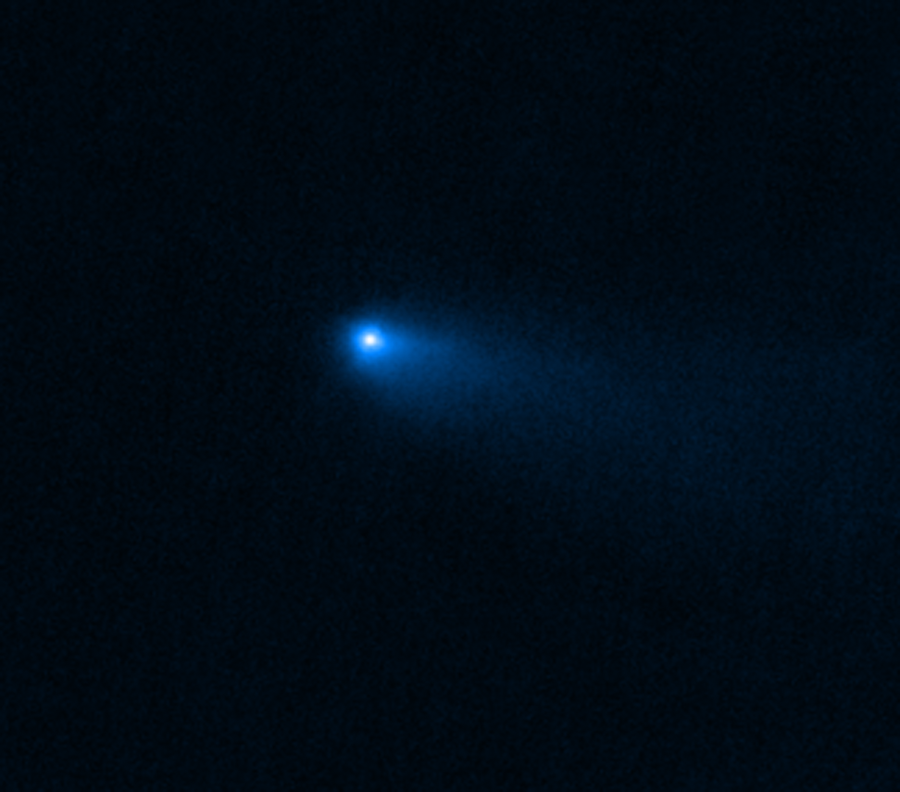
NASA's James Webb Space Telescope made history in May 2023 when it detected water vapor around a main belt comet named 238P/Read. Researchers first found water inside a comet that was located within the asteroid belt, which was once thought to be too hot for ice to exist. The discovery contradicts centuries of knowledge on where water is found in our Solar System.
With its extremely sensitive infrared detectors, Webb caught the faint signature of water molecules escaping off the surface of the comet. To everyone's surprise, there is no sign of carbon dioxide, a compound that is typically seen in comets that come from the outer Solar System. The surprising outcome raises new questions on the origins and history of comets.
Scientists believe that this discovery can redefining hypotheses about how water came on Earth billions of years ago. If comets in the asteroid belt still have water in them, they may have delivered water to Earth. Webb's ability to be able to pick up such weak signals shows how capable and powerful the telescope has become at being able to look far away to other galaxies and nearby objects.
What It Means for the Search for Life
Water is life, and finding water in places where it's not expected is always fun for scientists. The fact that 238P/Read holds onto water means the inner Solar System could be teeming with more water worlds than we thought before. That broadens the possible places where already existing or potentially existing habitable environments could be.
Lack of carbon dioxide could be an indication that the comet consumed it in transit or formed in an area of space containing very limited CO₂ to begin with. Accounting for these differences ensures that scientists understand how ice bodies travel and evolve across space. With each new finding, an image forms of how our Solar System ended up being so chemically complex.
Webb's observation of 238P/Read is a breakthrough in planet science. It brings together the chemistry of comets, the birth of planets, and the evolution of life into a single compelling narrative. With Webb ongoing operations, astronomers anticipate an even larger series of findings that will teach us more about how improving resources for life are distributed within the universe.


Comments