Soft Matter Studying in Space
- thecosmicblog12
- Mar 12, 2025
- 1 min read

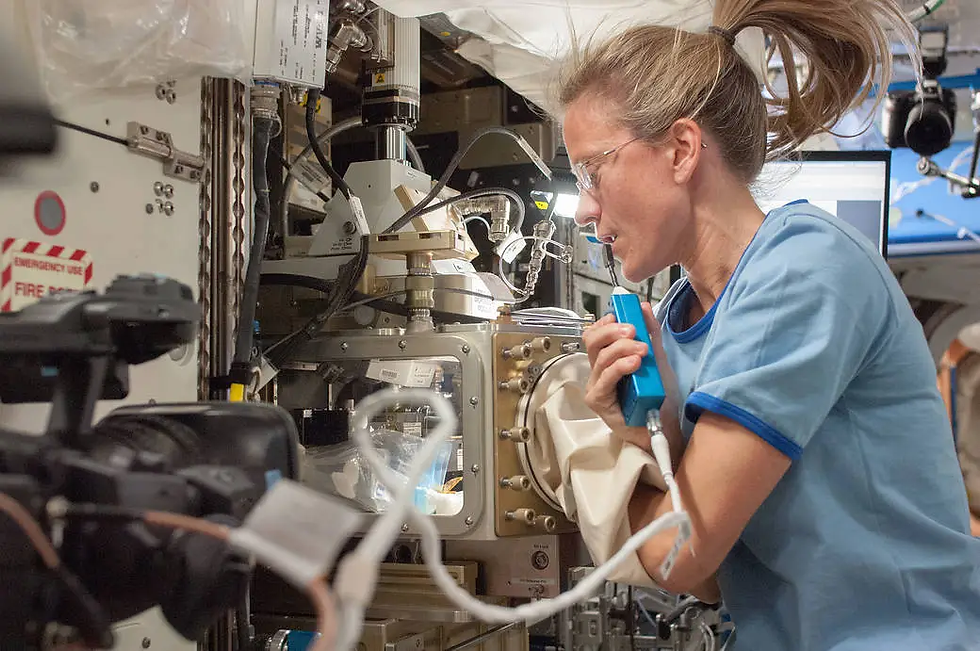
Probing soft matter beyond Earth's pull
On March 10, 2025 NASA published an accessible article explaining why scientists study soft matter - such as colloids, gels, suspensions and complex fluids - in space, where gravity's influence is minimized.
NASA Science
In microgravity, phenomena such as sedimentation and convection dramatically alter their character, giving an unparalleled view of how materials self-assemble, how interfaces behave, and how "soft" materials respond to external forces. That knowledge can feed back into materials engineering on Earth and for space systems.
Linking soft matter to space-ready materials
Research on soft matter may at first appear quite different from that on structural materials, but it underpins coatings, adhesives, polymers, composites, and interfaces between materials. In space missions, the performance of these materials is critical: adhesives must work under vacuum conditions, polymers must not outgas unexpectedly, and composites must manage thermal cycling and radiation. Studying soft-matter behavior in orbit - or aboard the ISS - NASA is building upstream insights into next-generation materials.
What this means for engineering
With your interest in materials modeling and robotics for students, this topic suggests an interesting project axis: how the soft-matter behaviors in microgravity might affect robotic joints, flexible structures, or deployable materials in space. You may want to model polymer-based hinges that work in low gravity or composite adhesives optimized for space. This announcement in mid-March can be a strong cue for interdisciplinary project work on materials science, robotics, and space environment constraints.


Comments