New Suborbital Platform Lets Payloads Test Lunar-Gravity Mechanisms
- thecosmicblog12
- May 8, 2025
- 1 min read

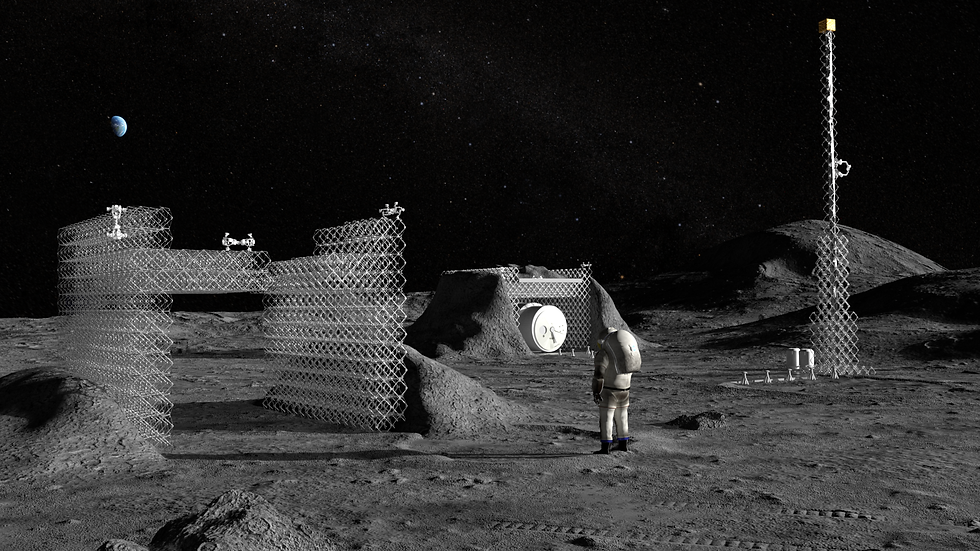
NASA announced a new capability for payloads to experience lunar-gravity conditions aboard a commercial suborbital rocket. The announcement described how researchers can now fly short-duration (~minutes) lunar-gravity (~1/6 g) trajectories to test mechanisms, actuators and deployable in a more relevant gravitational field than microgravity alone. This platform bridges the gap between zero-g testing and full-lunar surface deployment.
Why mechanical systems benefit
Mechanisms destined for the Moon, like robotic arms, drills, hoppers, and deployable booms, behave differently in ~1/6 g than they do in zero-g or Earth's gravity. Lunar-gravity testing helps with the validation of performance, reduction of design surprises, and refinement of control and structural feedback loops under realistic conditions. This new capability therefore strengthens confidence for lunar lander and infrastructure missions.
Broader aerospace implications
Beyond lunar systems, this capability also supports Earth-orbit and deep space hardware by allowing gravity-scaled testing of deployment and actuation systems. It offers the aerospace-mechanical community a midpoint between Earth-based rigs and full flight that reduces both risk and cost. It is indicative of test-in-space infrastructure maturing for future exploration.


Comments