NASA’s GRX-810 Alloy Ushering in High-Heat Aerospace Manufacturing
- thecosmicblog12
- Aug 17, 2025
- 1 min read

The Breakthrough
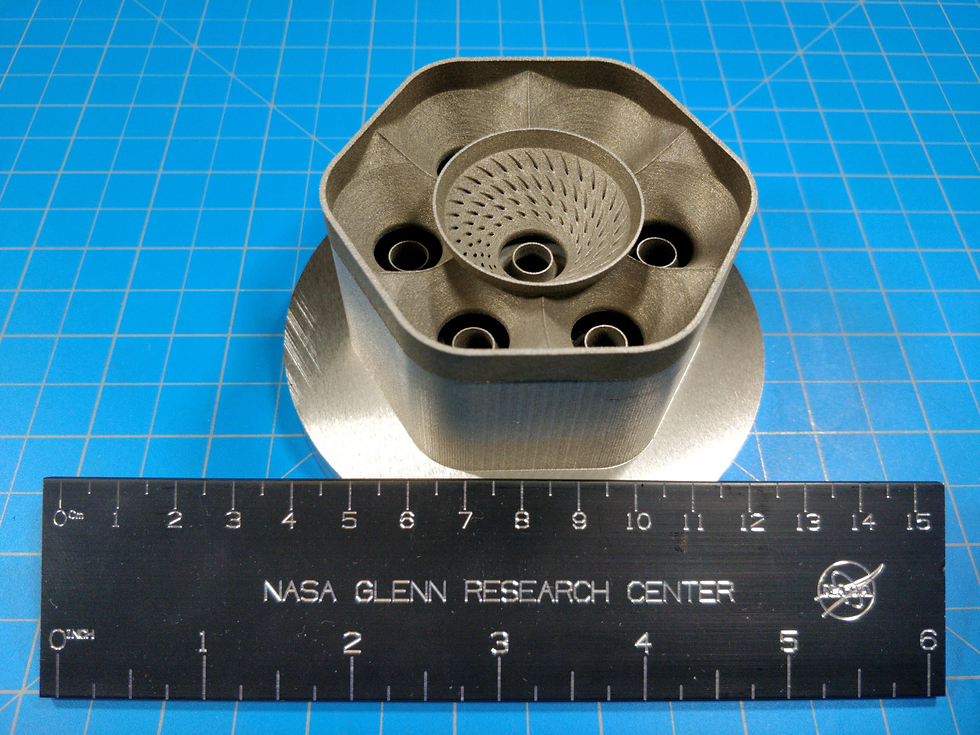
On August 15, 2025, NASA's NASA Glenn Research Center unveiled a new metal alloy called GRX-810, specially developed for the additive manufacturing of engine-level components that can handle extreme temperatures.
The alloy is designed to enable engineers to 3D-print rocket engine parts with the aim of removing some of the cost and supply-chain barriers tied to exotic super-alloys. It allows for geometries and production techniques not previously feasible in high-temperature aerospace applications.
Why This Matters for Materials Science in Aerospace
Materials science for aerospace isn't only about strength-to-weight; it is also about manufacturability, thermal endurance, and integration with complex mechanisms. GRX-810 lets engineers print components that must survive combustion-chamber temps, high pressure, vibration, and repeated cycling, enabling better, lighter, more integrated mechanical systems. The ability to merge materials science with manufacturing brings new possibilities for next-generation aerospace structures, mechanisms, and propulsion systems.
Key Engineering Insights
First, aerospace designers have to start thinking in terms of materials by manufacturing pathway-printed versus cast versus forged-and how this influences mechanical behavior under thermal and mechanical loads. Second, printable high-heat alloys can enable the geometry of mechanisms like thrust vector control actuators or deployable structural members to become optimized, with features integrated that could not be achieved with traditional alloys. Third, this advance points to a shift: mechanical and structural systems in aerospace will increasingly be designed with consideration of the interplay between manufacturing and materials, rather than in a linear sequence starting with design, followed by material, then manufacture.


Comments